Albania – Is it really a Muslim country?
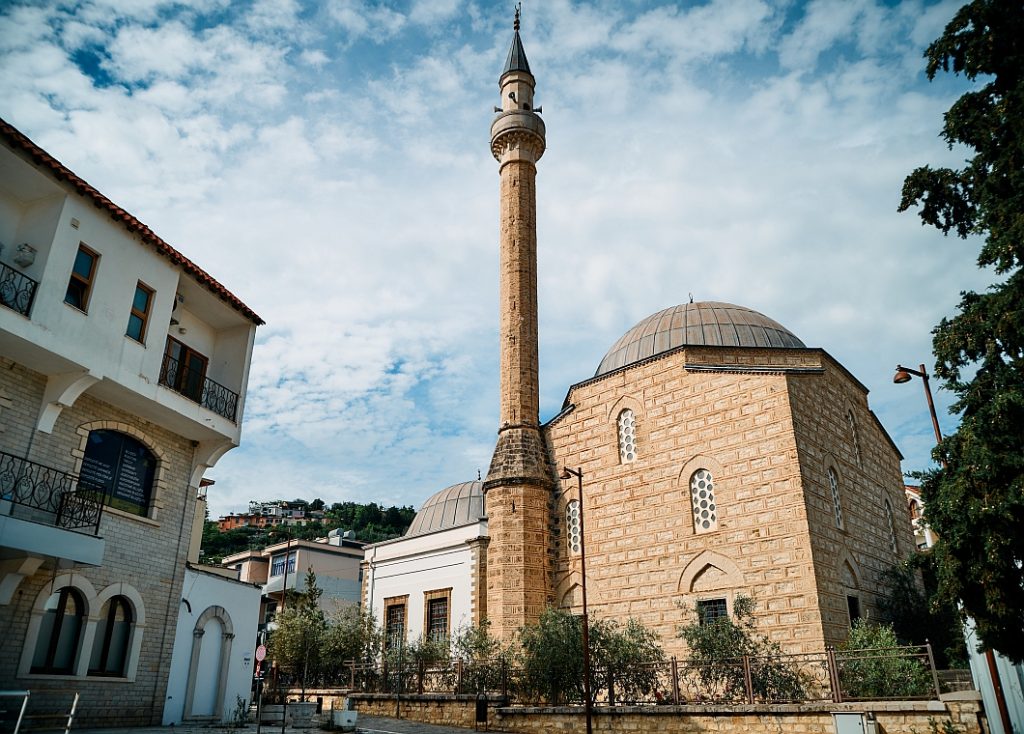
First impressions and concerns
When I was planning my first trip to Albania in 2015, I encountered warnings from my family. They were concerned about my safety, convinced that Albania, as a Muslim country, could be dangerous. At that time, my knowledge about this country was minimal, so I decided to explore the topic. I began intensive reading about its history and spoke with many Albanians to better understand their culture and worldview.
Historical roots of religion in Albania
Christian times and the Ottoman Empire invasion
Before Albania came under Ottoman Empire rule in the 15th century, it was a Christian country. The Turks gradually occupied the territories of Albanian clans, including the city of Kruja – the birthplace of John Kastrioti, father of Gjergj Kastrioti, later known as Skanderbeg – Albania’s national hero.
After capturing the fortress in Kruja, young Gjergj was taken to Turkey as a hostage. Raised and trained in the Ottoman army, he quickly mastered the language and participated in numerous military campaigns. However, in 1443, along with a group of 300 loyal companions, he escaped from the Turkish army and returned to Albania, where he successfully resisted the Turks for the next 25 years.
After his death in 1468, the Turks regained control of the country and remained there for the next four centuries.
Where does Islam in Albania come from?
The process of society’s Islamization
Initially, Albania was Christian – Islam appeared only with the Turkish occupation. Conversion to the new religion was often forced – either out of fear of persecution or for privileges. Muslims could count on better treatment: shorter queues in offices, allocation of better land, or avoiding deportations that affected Christians.
Time of religious repression – Enver Hoxha’s rule
The period from 1944 to 1985, when Enver Hoxha was in power, was exceptionally difficult for all religious communities. Hoxha declared Albania the world’s first atheist state – he banned any religion. Hundreds of mosques, churches, and temples were destroyed, and places of worship were converted into warehouses or restaurants. Possessing a Bible or Quran could result in years of imprisonment. Society lived in fear and many citizens stopped practicing their faith.
Religion in today’s Albania – what does it look like now?
Statistics and contemporary religiosity
After the regime’s fall in 1985, the religious situation normalized. Currently in Albania:
- about 70% of residents identify with Islam,
- about 20% are Orthodox,
- Catholics make up about 10% of society,
- there is also a significant group of non-religious people.
Despite the dominant share of Muslims, Islam practiced in Albania has an exceptionally mild character. Many believers are Bektashi – a liberal, mystical branch of Islam. They drink alcohol, eat pork, and their homes are decorated with images of saints – things unthinkable in more conservative streams of Islam.
Mutual respect and religious tolerance
In Albania, religion is treated as a personal matter. There is broad tolerance between followers of different religions. Mixed marriages – for example, a Muslim with a Catholic – are nothing extraordinary. Moreover, in some localities there are common cemeteries for all three main religions. There are also known cases of shared prayer places for Muslims, Catholics, and Orthodox.
Albanians jointly celebrate the most important religious holidays – regardless of denomination. Days off are granted for Islamic, Catholic, and Orthodox celebrations alike.
Albania – a country of peace and religious harmony
Albania surprises with its openness and tranquility. Although Islam is the majority religion here, it has nothing to do with radicalism. Albanian Islam is primarily about peace, tolerance, and friendly coexistence with other religions.
A saying popular among Albanians: “Religion is a private matter” well reflects their approach. No one asks what you believe – it’s your personal decision that should be respected.
Summary: Is Albania a Muslim country?
Yes, in a statistical sense – but not in the way we often imagine Muslim states. Albania is one of the most religiously tolerant countries. Islam here has a peaceful, liberal character, and society values freedom of religion and mutual respect. It’s a country that shows that religious diversity can be a source of unity, not division.
