Tirana – a post-communist city with soul and potential
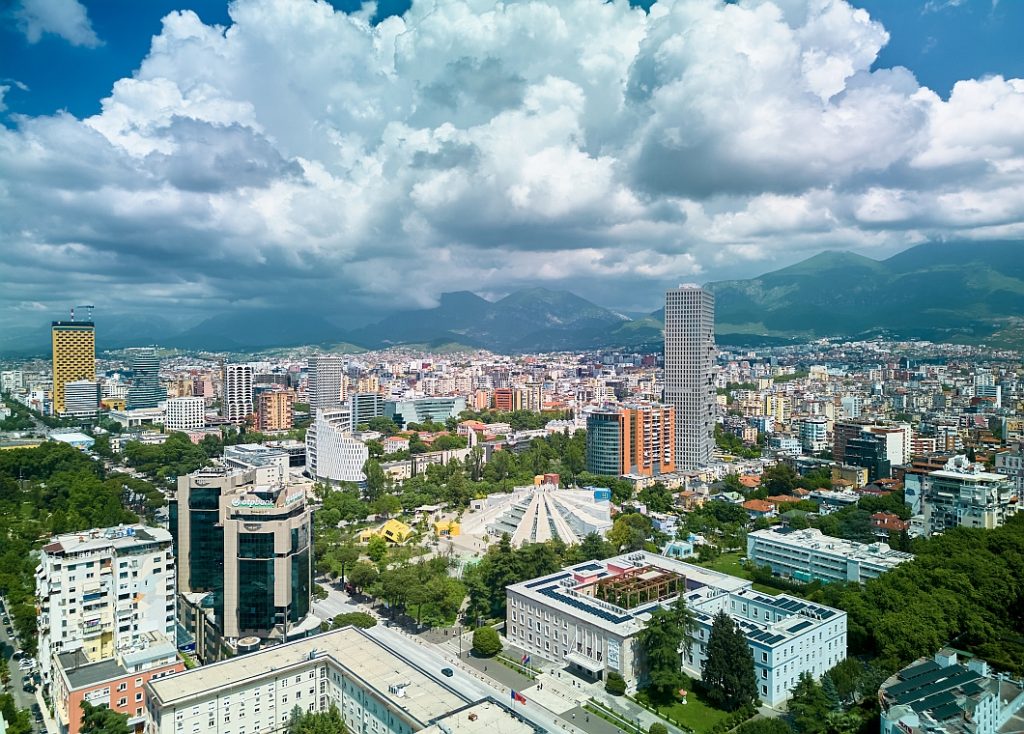
Chaos and Crowds – First Impressions of Tirana
From the series of optional excursions for Poles, in Polish, with a Polish guide, from Durres, Golem, and Mali Robit. Tirana, the capital of Albania, evokes mixed feelings. The city is often perceived as urban chaos. On a relatively small area – less than 50 km² – nearly a million people live. For comparison: Warsaw, with 1.7 million inhabitants, occupies as much as 520 km². Such a high population density brings many challenges.
The most noticeable issue is the lack of fresh air. Smog and exhaust fumes are palpable almost immediately upon entering the city. For those who value contact with nature and quieter places, Tirana can be overwhelming. However, like any metropolis, it also has its advantages.
Nightlife, Culture, and Energy of the Capital
Tirana is a vibrant city. It offers a rich cultural scene, plenty of restaurants, cafes, and a very dynamic nightlife. During a tour in Polish, you will find both local flavors and international cuisine, art galleries, clubs, and pubs open until dawn.
Practical Tips for Tourists
To get to know the capital of Albania well, two days are enough. It’s best to stay in the center – most attractions are within walking distance. Renting a car in Tirana doesn’t make much sense – traffic jams are heavy, GPS often fails, and parking, even in paid parking lots, is a significant challenge.
What to See in Tirana? The Most Interesting Attractions
1. Sky Tower – The Capital from a Bird’s Eye View
It’s worth starting your sightseeing at Sky Tower. On the 18th floor, there’s a revolving cafe with a panoramic view of the city. While enjoying a coffee, you can see all of Tirana within an hour – without moving from your seat.
2. Post Bllok – A Memento of Communism
This is a memorial to the victims of the communist regime. Albania is famous for its bunkers – some sources state there are as many as 700,000 of them! One of the most interesting is BunkArt 2 – an anti-nuclear bunker transformed into a museum. There you will find unique exhibits, films, sound effects, and the characteristic scent of bygone eras. Descriptions are in English.
3. The “Reja” Installation – The Cloud
In front of the National Gallery of Art is a unique art installation called “Reja”, designed by Japanese architect Sou Fujimoto. It is an openwork, spatial structure made of steel rods, which can be viewed and even entered.
4. Skanderbeg Square
Tirana’s central square is named after the national hero – Skanderbeg, who effectively fought against the Ottoman Empire in the 15th century. It includes:
- Et’hem Bey Mosque – built in 1792, recently renovated, with a beautifully decorated interior.
- Clock Tower (Kulla e Sahatit) – dating back to 1822, once the tallest building in Tirana. You can climb to its top via 90 steps.
5. House of Leaves – Shtëpia e Gjetheve
This modern museum is located in the former center of Albanian intelligence. Its name refers to the surrounding trees, which are among the few in Tirana that shed their leaves in winter. The museum reveals the inner workings of communist surveillance.
6. The Pyramid – A Relic of Communism
The controversial pyramid-shaped building was constructed in 1988 as a museum in honor of Enver Hoxha. It was designed by the dictator’s daughter – Pranvera Hoxha. For some, it’s an architectural curiosity; for others, a symbol of a bygone era. At the time of its construction, it was the most expensive structure in the country.
7. Enver Hoxha’s House
Finally, it’s worth seeing the house where Enver Hoxha lived – one of the cruelest dictators of the 20th century. It is located in the Blloku district. Interestingly, his 90-year-old widow lives across the street.
Tirana – A City of Contrasts
Although Tirana can be overwhelming with its chaos and crowds, it also offers a unique atmosphere, interesting sights, and immense cultural richness. It’s worth coming here to feel the pulse of modern Albania, confronting its past and boldly looking to the future.
